
It was my last day of travel, and I had one place left to visit. I had learned that Lake George, New York was home to an amazing anachronism – the world’s very last Howard Johnson’s restaurant.

Howard Johnson’s (affectionately known as HOJOs) was the largest restaurant chain in the U.S. in the 1960s and 70s. It was famous for its fried clams, 28 flavors of ice cream, and distinctive orange roof. There were over a thousand of them scattered along American highways. Like New York’s Automats, HOJOs used a “commissary system,” cooking all the food in a central kitchen so that only the final preparation and presentation happened at the restaurants. To run the kitchen, the company hired French culinary legend Jacques Pepin as chef, stealing him and Chef Pierre Franey away from New York’s swanky Le Pavilion.
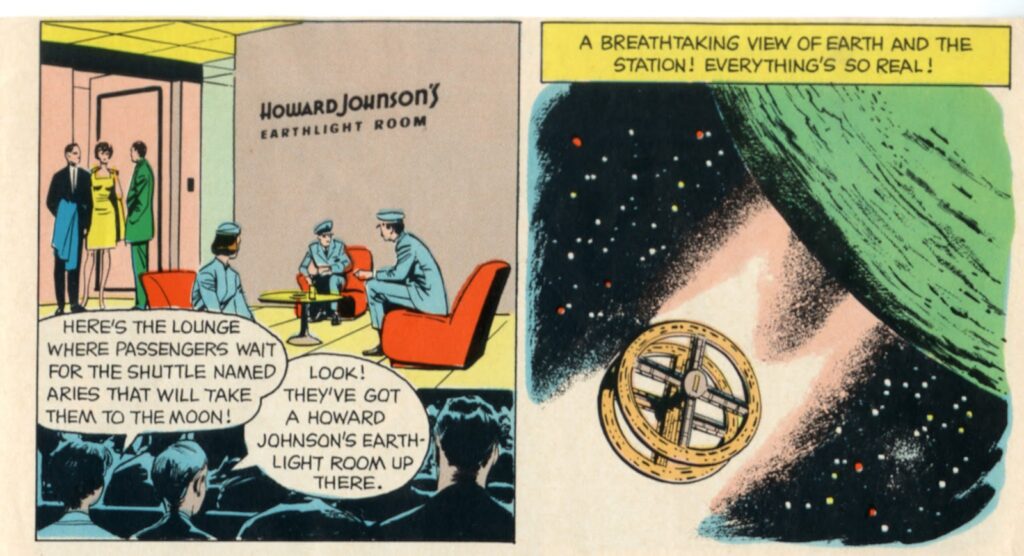
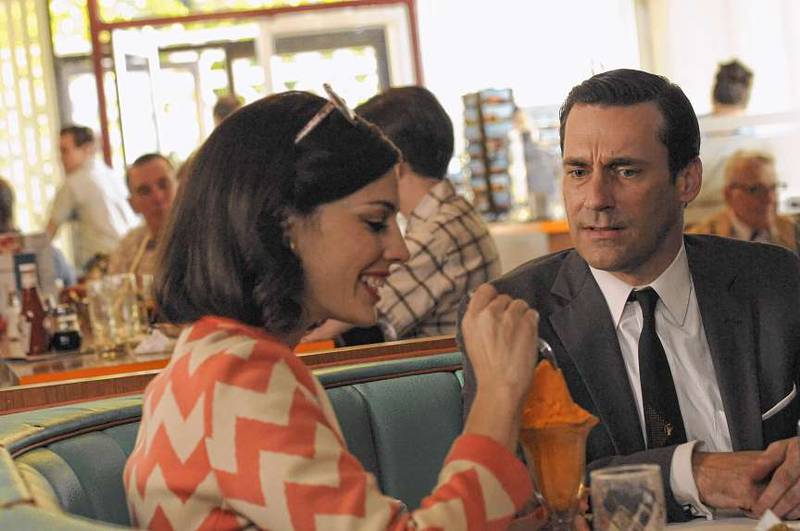
The place was such a part of the American travel experience that the 1968 movie 2001: A Space Odyssey featured a Howard Johnson’s restaurant in an orbiting space station. They were the only company allowed to sell food on the New Jersey turnpike. HOJOs was such an icon of the mid 20th century that it starred in an episode of Mad Men, the one where Don Draper walked out on his girlfriend after a kerfuffle featuring HOJO’s signature orange sherbet. As the 60s and 70s rolled on the company continued to grow, branching out into motels and a line of TV dinners and other frozen food.
But the love of a quick meal near an interstate highway that built HOJOS ultimately destroyed it. McDonald’s, Burger King, Duncan Donuts, KFC and the like introduced simplified menus that didn’t require the expense of a centralized commissary. These places may not have offered table service, ice cream, or cocktails, but they got people in and out faster, and that was what highway travelers seemed to want. After founder Howard Johnson, Sr. died in 1972, the company went through a slow, painful decline. There was a confusing tangle of takeovers and sales, the brand eventually being purchased by Wyndham Hotels. They kept the Howard Johnson’s name for some motels, but abandoned the restaurant business as the 20th century drew to a close. A few lingered on into the 2000s, but by 2010 they were all gone.
This included the Lake George location I was about to visit. There was still a diner there, and it still had an orange roof, but for quite a while it had simply called itself The Lake George Family Restaurant.
In 2014 a new owner discovered a clause in his lease that gave him the right to use the Howard Johnson’s name. He renamed the restaurant, hoping that nostalgia would draw customers.

Frankly, It’s a stretch to call the current place a Howard Johnson’s. The orange roof and the familiar sign are there, but there’s no ownership or other connection to the remaining Howard Johnson (i.e. Wyndham) properties. The menu didn’t have fried clams or any of the HOJO classics, and though they might serve ice cream, they don’t have orange sherbet, much less 28 flavors. Online reviews were not very good. But I was curious to visit and hoped it might evoke some memories.
The town of Lake George has been a tourist spot for a long time. In 1791 our old pal Thomas Jefferson called it “without comparison, the most beautiful water I ever saw.” and by the late 1800s private train cars carried Roosevelts, Vanderbilts, and Rockefellers from New York to escape the summer heat and enjoy the spectacular view. It’s still popular in the summer; the home of The Great Escape amusement park 1 and a scattering of the usual tourist-oriented shops.

Lake George was not bustling this December. Despite a cluster of “outlet mall” shops, Lake George hasn’t managed to transform itself into a year-round destination. In fact, Atlas Obscura told me that “The Last Howard Johnson’s” was closed in winter, but some friends who had insider knowledge told me that it might be open for breakfast.
I pulled into the spacious, icy parking lot, empty except for a few pickup trucks. Whatever its faults, the place definitely looked like a Howard Johnson’s. The dining room still had the maroon vinyl booths and orange-sherbet walls I remembered. But it was empty. There was no table service and the long brightly-lit room could have been a scene from a post-apocalypse sci-fi flick. It wasn’t roped off, but it was clear that there was no table service available.


At the familiar green Formica counter were a few guys in trucker caps lingering over their coffee or the remains of the $1.99 breakfast special. I could tell that they were locals who had known each other for a long time, and they sat reminiscing, joking, and teasing each other and the waitress. She was a sassy waitress waitress straight out of central casting, and she teased them right back before turning to take my order. There were no menus; The breakfast special appeared to be the only item available. The eggs, toast, and bacon were fine. I was sad but not surprised to see that, despite an illuminated Ice Cream sign, the number of flavors had plummeted from 28 to zero (at least in December). I found myself hoping that they offer ice cream in the summertime.


The last HOJOs was obviously a marginal business limping along on some local trade and the occasional nostalgic tourist like me. A few months later I learned that it had closed for good. I’m glad I got to see it.

I wiped the egg yolk off my face, finished my coffee, and walked out to take one last picture of the blue and white sign and the orange roof. The parking lot was more hockey rink than pavement. If I needed a reminder that I was back in the Northeast , this would serve. I walked gingerly toward the road, snapped my picture and headed back to my car for the last lap.
With the tourist businesses shut down it was easier to ignore the town and appreciate Lake George itself. I stopped at a scenic pullover and wondered at how I seem to have forgotten what an iced-over lake looked like. The surface looked like a clean white sheet on a hospital bed. The shores were lined with deep green, almost black pine and spruce. I took a deep breath of the deliciously crisp air and smiled. Even the piles of filthy snow at the side of the road seemed to be homey and welcoming.
Riding north on 9N I reach the town of Ticonderoga, famous in Vermont for the British fort that Ethan Allen and his Green Mountain Boys captured in the early days of the Revolutionary War. I swung around a familiar traffic circle. In the middle of the roundabout is a beautiful monument. I’ve wondered why this statue is still sitting in a place where it’s particularly unsafe to stop and enjoy it. I love allegorical sculpture. There’s nothing I’d rather look at than artist’s vision of a noble idea like Justice, Victory, Love, or Truth in human form. This monument is a beautiful example. Four soldiers (Iroquois, French, British and yep, a Green Mountain boy) circle the plinth. Dancing above them is the image of of Liberty, a wind sending her robes flying and revealing her curves. I’ve been past it more than a dozen times. Each time I’ve wanted to find a place to park and dodge the traffic circling the sculpture to see it up close. I’ve never done that (though occasionally took a second loop around the circle to sneak a peek). This wouldn’t be the time for that either. I’m not sure why. It’s not as if I had a schedule. But the gravitational pull of home was increasing exponentially. I was less than a hundred miles from my front door and I couldn’t bring myself to stop.

I caught a glimpse of Lake Champlain on my right and felt I had reached my own backyard. Moments later I approached the beautiful new Crown Point bridge. Following its curve up and over lake Champlain I saw the “Welcome to Vermont” sign. It was a surprisingly emotional moment. I called Joanna to let her know I was home.

Thank you for taking me on this ride and the delicious eggs, home fries and toast.
Just finished reading the final entry of your travel logs. There is so much to see and learn in this country and you certainly did just that. Thank you for sharing.