
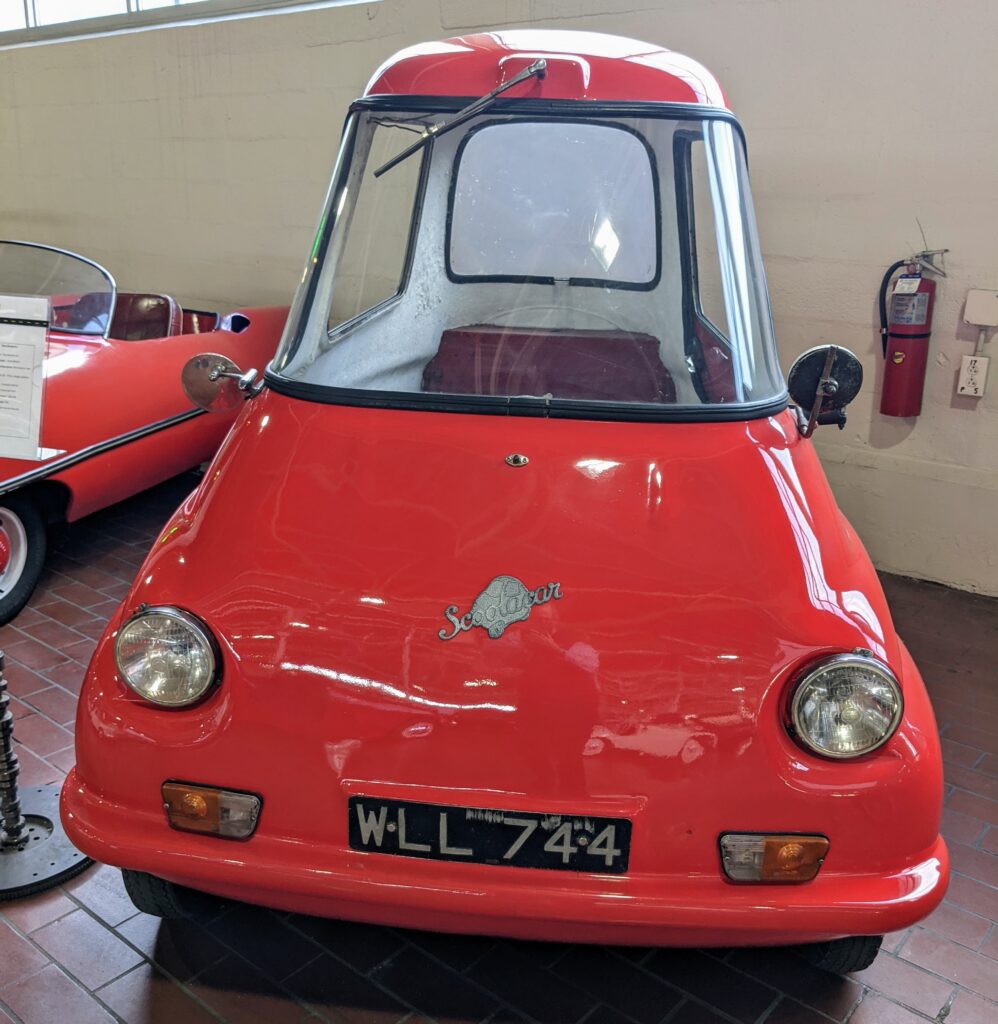
Ann had her own plans for Sunday morning, and little interest in my destination, a place I had spent many years dreaming of visiting: the Lane Motor Museum. I love the look of many old cars (I worked for Hemmings Motor News : The Bible of the Old Car Hobby in the 1990s), but my favorites are “microcars,” tiny fuel-efficient cars, many of which were made in Europe immediately after WWII.
Gas to power cars and steel to build them were in very short supply, but the desire for transportation wasn’t, and neither was design genius. It didn’t hurt that many microcars were small and low-powered enough to be legally registered as motorbikes, keeping the cost of ownership even lower. The Lane Motor Museum has one of the finest collections of microcars in the world.

Jeff Lane started collecting oddball cars when he was a teenager and never stopped. Though microcars are the stars of the museum, it happily exhibits propeller driven cars, amphibious cars, a two-wheeled car stabilized by a huge gyroscope, ice-sledding vehicles driven by sails and built on skis, a 1938 German car that was fueled with coal, a motorcycle that folds into a briefcase, cars with bodies of canvas, vinyl, and stainless steel, and just about any oddball motor-driven vehicle that Lane could find. At the other end of the size spectrum, a gargantuan amphibious military transport vehicle is parked out back (there’s no way to get it into the building). This behemoth is 62 feet long with tires 9 feet tall.
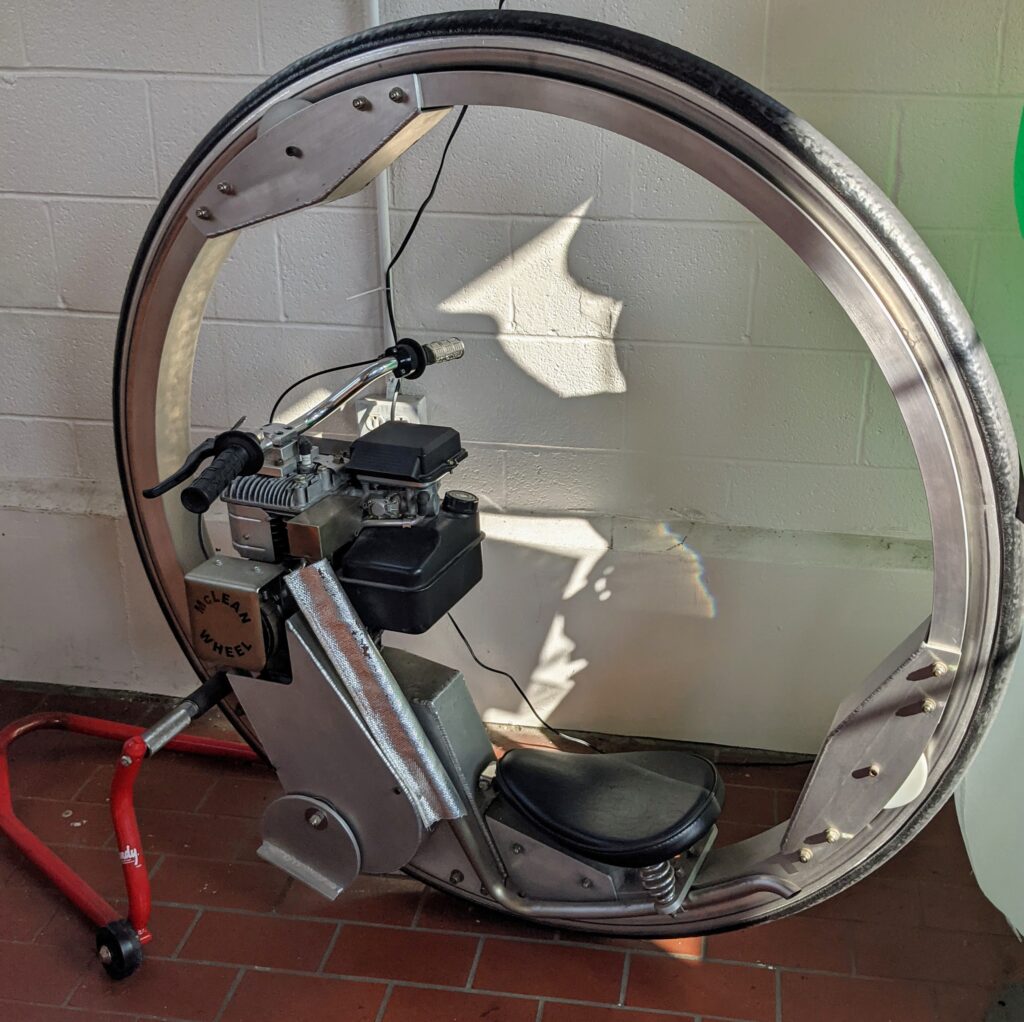
probably the oddest ride here

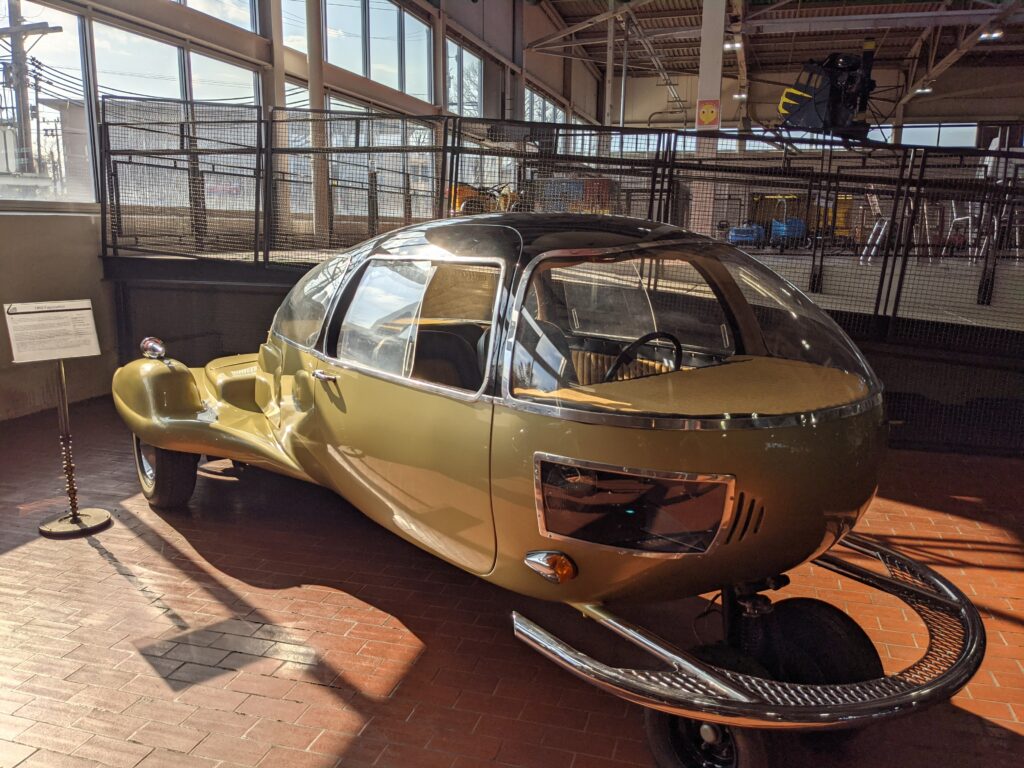
like in this Czechoslovakian postwar car
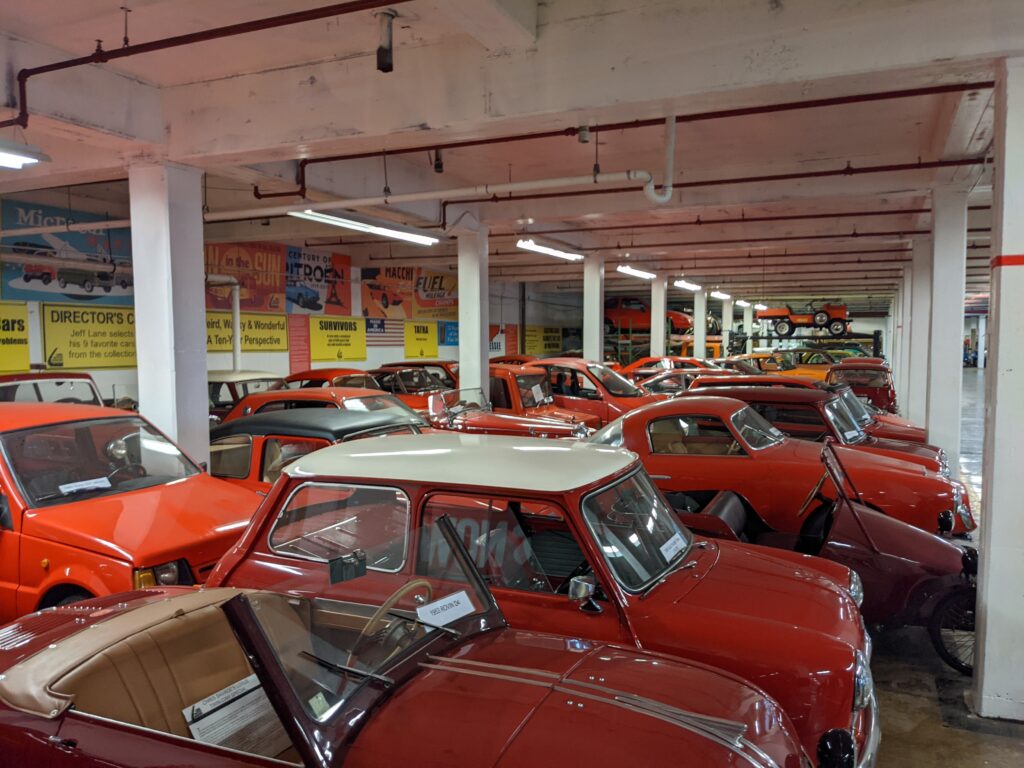
I had to catch my breath when I entered. Row on row of shiny little vehicles filled the cavernous space that was once a Sunbeam bread bakery. I’m going to do my best, dear reader, not to bore you too much, but I can’t help but mention a few of my favorites.

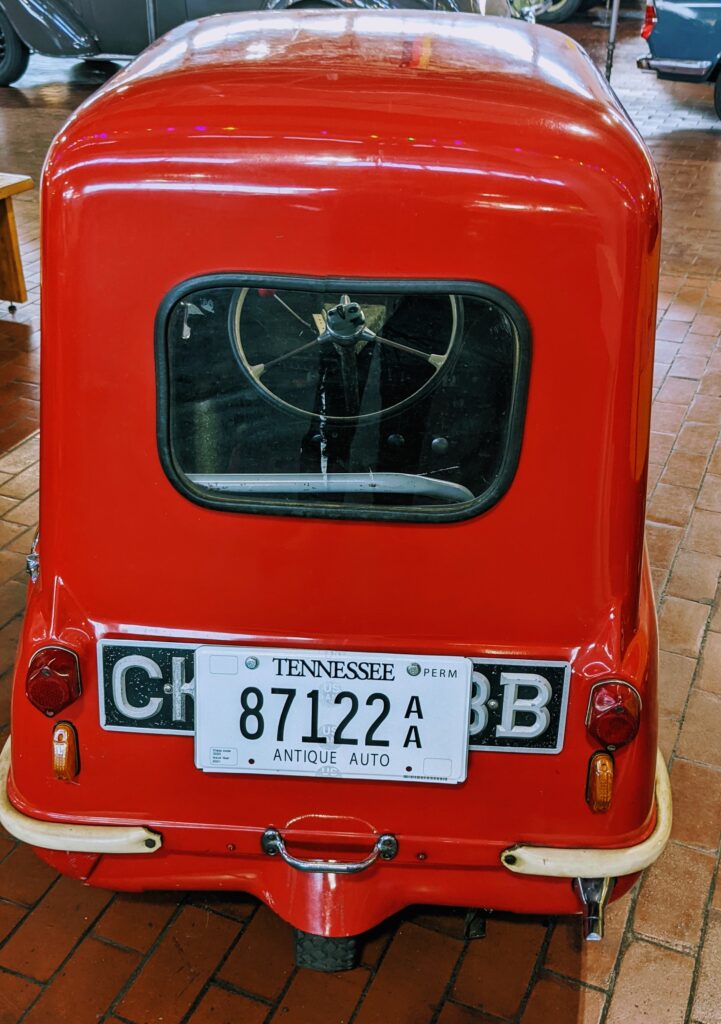
One of the more adorable cars is the Peel Trident, a three-wheeled two-seater (well, alleged two-seater) from the Isle of Man. It can get over 80 miles per gallon of gas (2.8 liters/100 km). Though it lacks a reverse gear, that’s less of a problem than you’d think, since there’s a handle on the rear bumper. You merely jump out, lift it up like a wheelbarrow, (it weighs 130 pounds), and turn it around.

The sight of two of my all time favorites made me wish, briefly, that I was the kind of super-rich person who could collect these myself. The first of these was the Messerschmidt Kabinenroller, made in Germany in the mid-1950s and early 1960s. Messerschmidt made Nazi fighters and bombers, and for a while after the war they weren’t allowed to make aircraft. Instead, they started cranking out this futuristic “bubble car.”
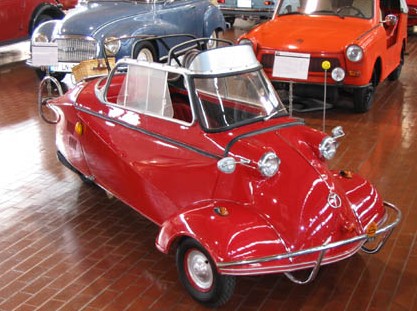
It seated two, with the passenger sitting behind the driver (that way they could sell to countries that rode on either the left or the right hand side of the road without modifying the design). The sleek and forward-looking Messerschmidt was used as a “car of the future” in science fiction films half a century after it rolled off the assembly line.
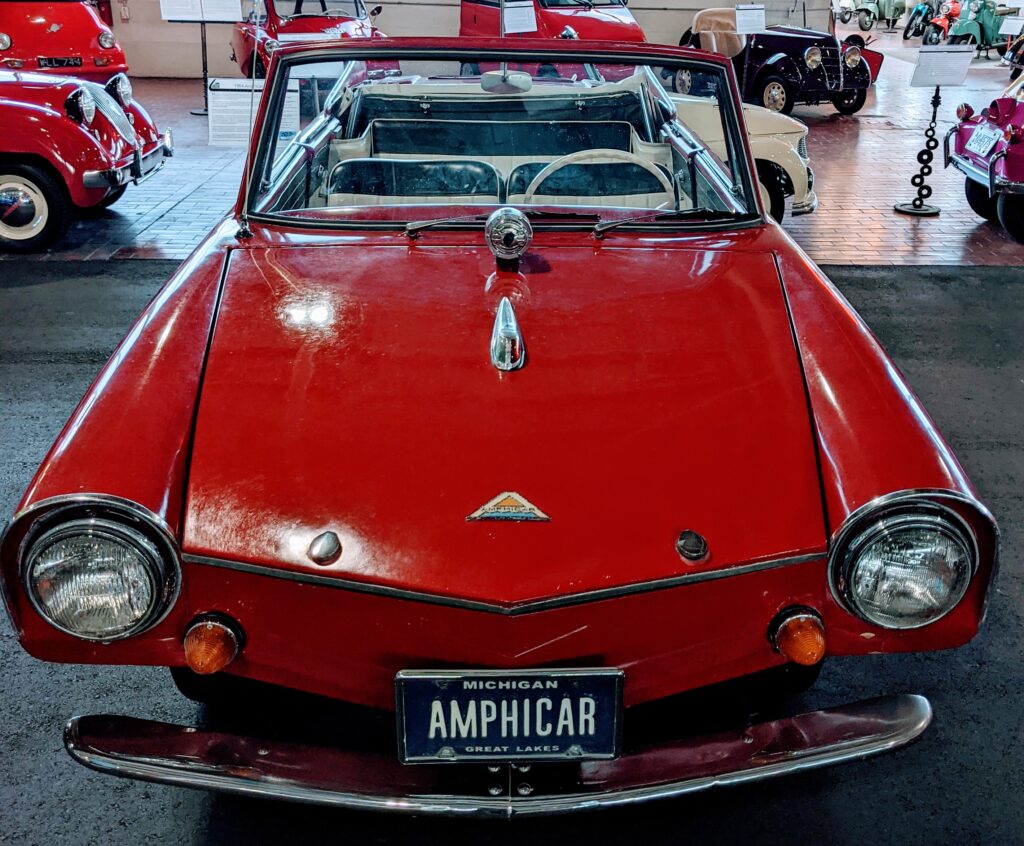
The second was the Amphicar, which I have lusted after since my childhood, when a Popular Science story about this mid-century car/boat hybrid first caught my imagination. I remember catching a glimpse of one in Boston In the 1980s: sometimes on on Storrow Drive and sometimes on the Charles River. Reports from people who have actually driven one tell me that it wasn’t a great car and it was an even worse boat. In the water the front wheels, acting as a crude rudder, were the only steering mechanism. It leaked a lot, and It tended to get stuck between the water and the land. But it offered a new kind of transportation freedom, and it was a beauty, with a look somewhere between a sportscar and speedboat and the largest fin-to-body ratio of any car in history. It even starred in a “Come Alive, you’re in the Pepsi Generation” advertisement and a 1983 Madonna video.

These had been my dream cars, but then I set my eyes on the 1950 Martin Stationette and fell in love. James Martin was a pilot and inventor who built several prototype urban economy cars, but was never able to convince a manufacturer to produce them. The Stationette’s frame and body were made entirely of wood, the sleek but funky teardrop shape showing off curves of maple, spruce, oak, and mahogany, with shiny chrome accents. The dashboard is a curvaceous masterpiece of cabinet work.
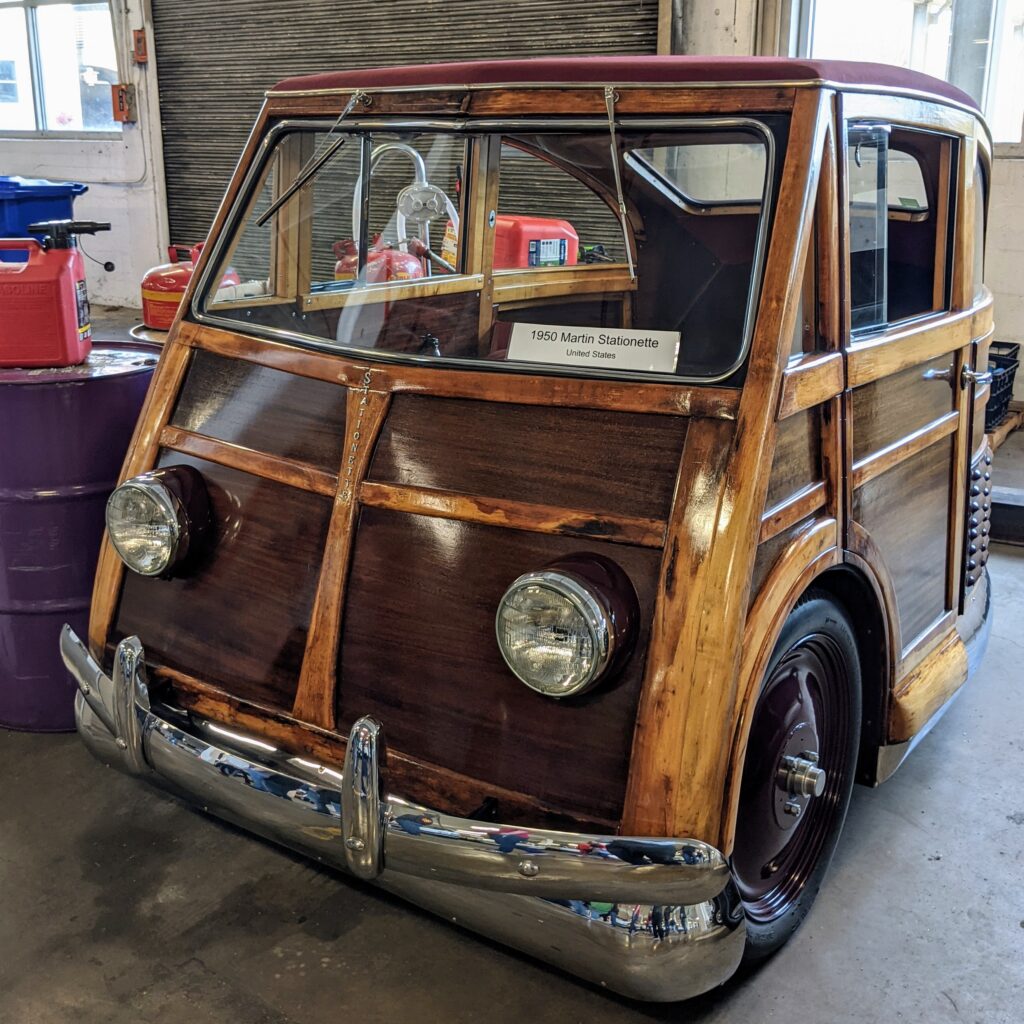
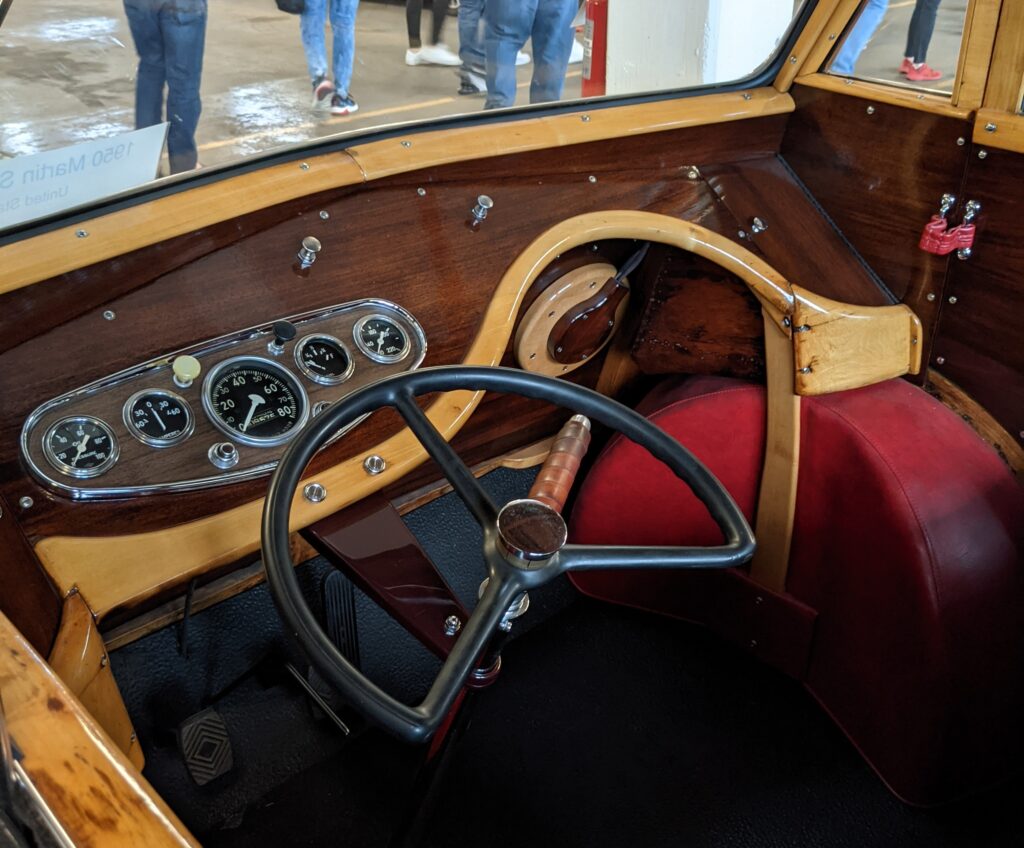
I ache to own my own Martin Stationette, though I’ve read it’s a nightmare to drive. Instead of springs and shock absorbers, Martin kept costs down by using bungee cords for the car’s suspension (no, I am not joking). The few who’ve gotten behind the wheel say that over about 35 miles an hour the tooth-rattling shaking is so severe that it’s challenging to steer. In fact, it’s hard to even see the road.
Foot-weary in the way that can only be caused a day of museum walking, I headed back to Anne’s house in a Subaru that, after visiting all those microcars, felt like a living room on wheels. I had promised to make her a batch of latkes (the potato pancakes Eastern European Jews eat to celebrate Hanukkah). Anne was not only happy to let me take over her kitchen, but invited me to celebrate the holiday with her and her mom. Mom was recovering from an injury in a nursing facility somewhere in Pennsylvania. We lit the candles and sang the traditional prayers and songs via video call.

“We lit the candles and sang the traditional prayers and songs …” How completely lovely.