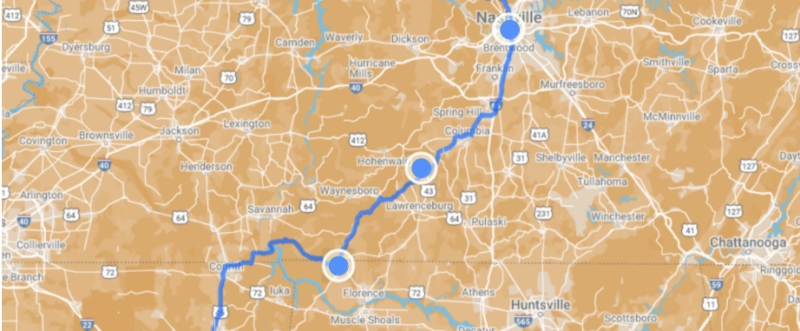
I said goodbye to Anne, fumbling a few thank-yous in attempt to express my gratitude for her hospitality. Just down the road and long on my wish list was something called the Natchez Trace Parkway. Built in the 1930s as one of many “New Deal” projects designed to lift American out of the depression, the parkway meanders about 450 miles from Nashville, Tennesee to Natchez, Mississippi. It follows an ancient forest trail used by native Americans and early settlers. That path was called “The Trace” because it followed the tracks of of buffalo and other migratory animals.
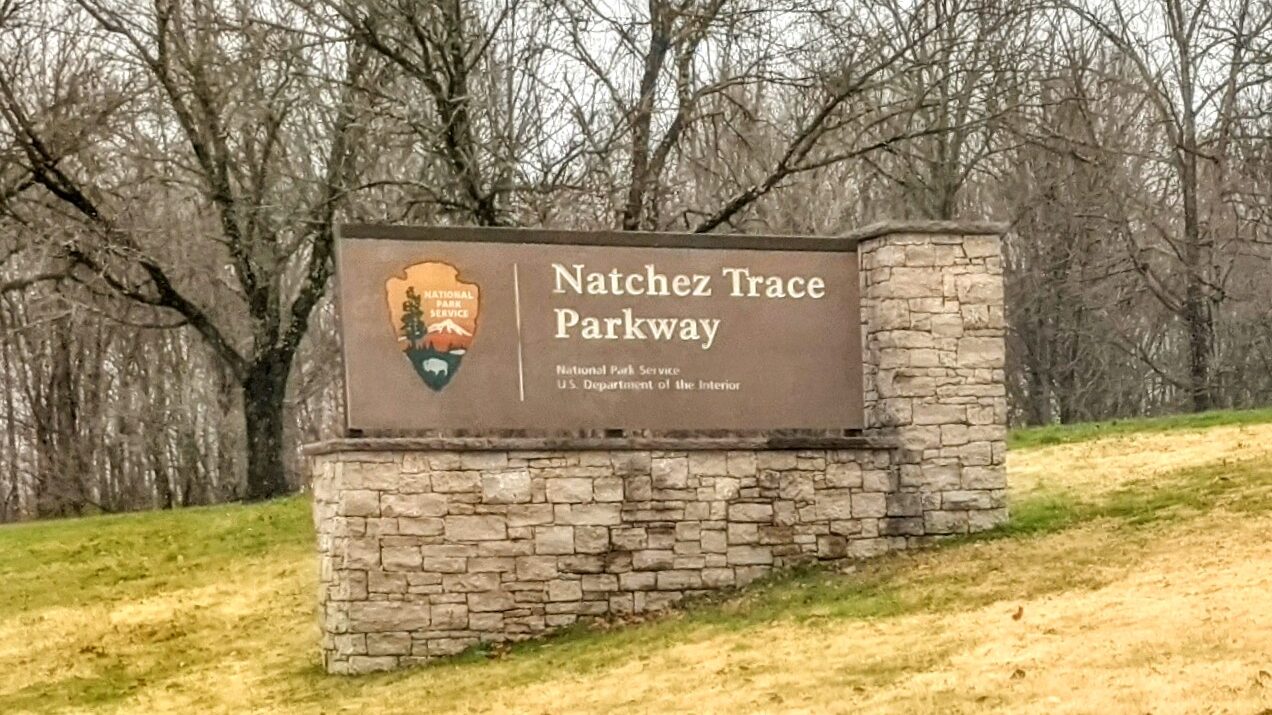
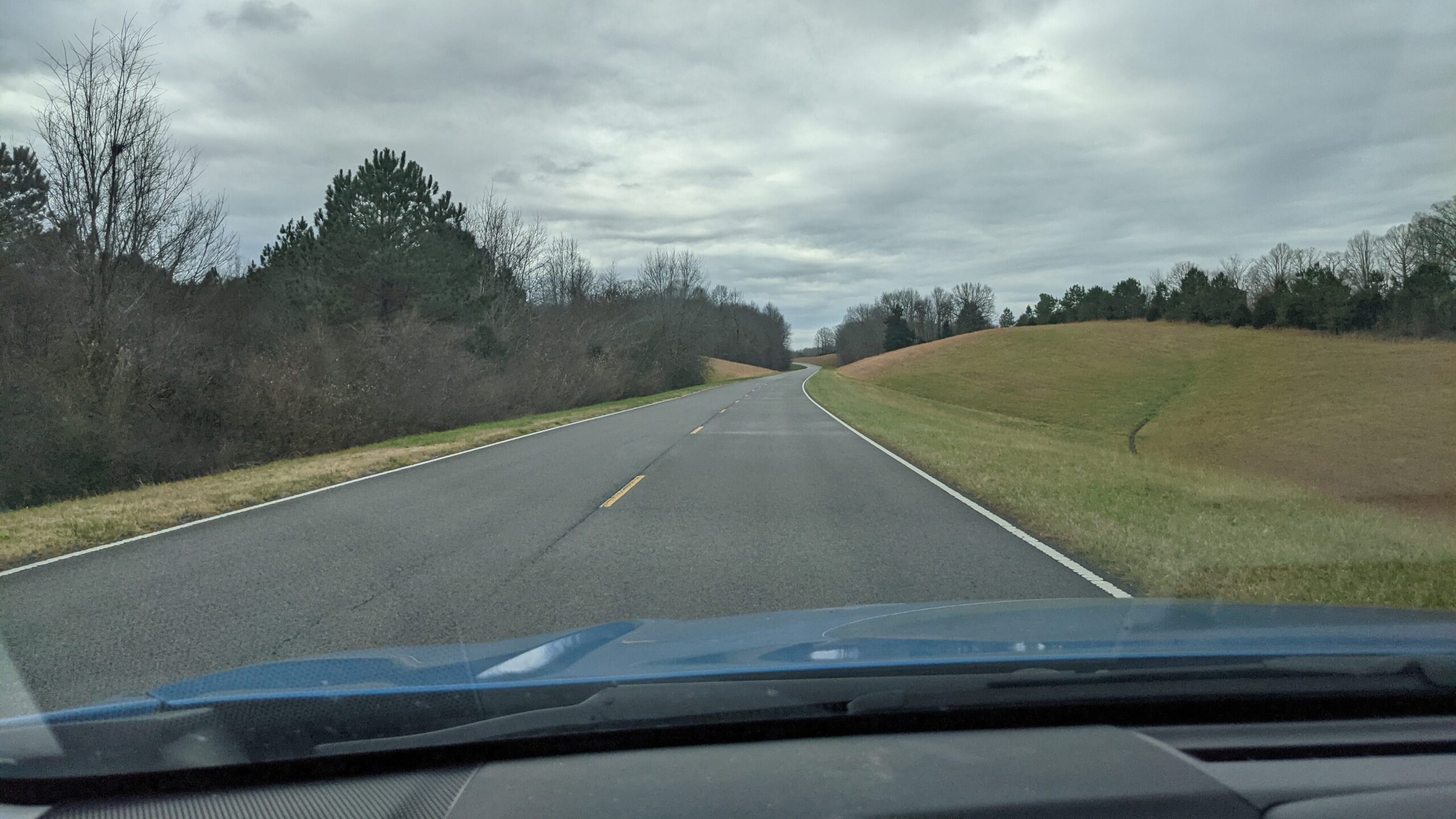
This road is different from anything I’ve experienced. Nowadays we drive to get someplace. It’s hard for us to imagine a time when people would “go for a drive” for fun and relaxation. It’s even harder to imagine that federal funds would be used to build a road primarily for recreation. Reading up on the Trace, I knew that it was going to be a joy to drive. With speed limits between 40 and 50 miles per hour, the parkway gently rolls over and curves around woodland, meadows, and rivers. Occasionally it bridges a deep gorge or opens up to a mountaintop view. It’s a road, but at the same time it’s a genuine park, the whole long and winding length managed by the National Park Service.
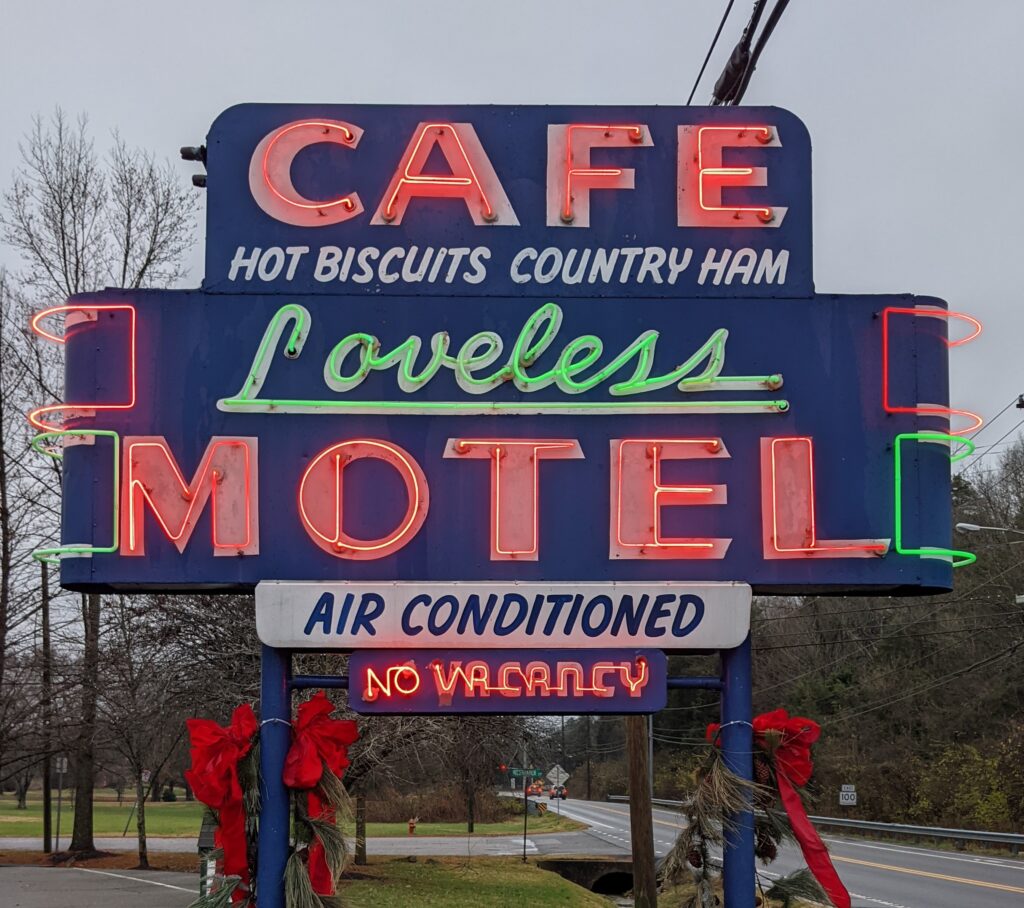
But first I had to have some biscuits. At the northern end of the Trace is a place called the Loveless Cafe. It started out in the 1950s serving chicken and biscuits on picnic tables, and it’s evolved into a huge restaurant, a successful mail order “ham and jam” business, and a sprawling complex of shops. I was now in the South, where folks take their biscuits seriously, and this was a place that had earned many superlatives. I had to stop.
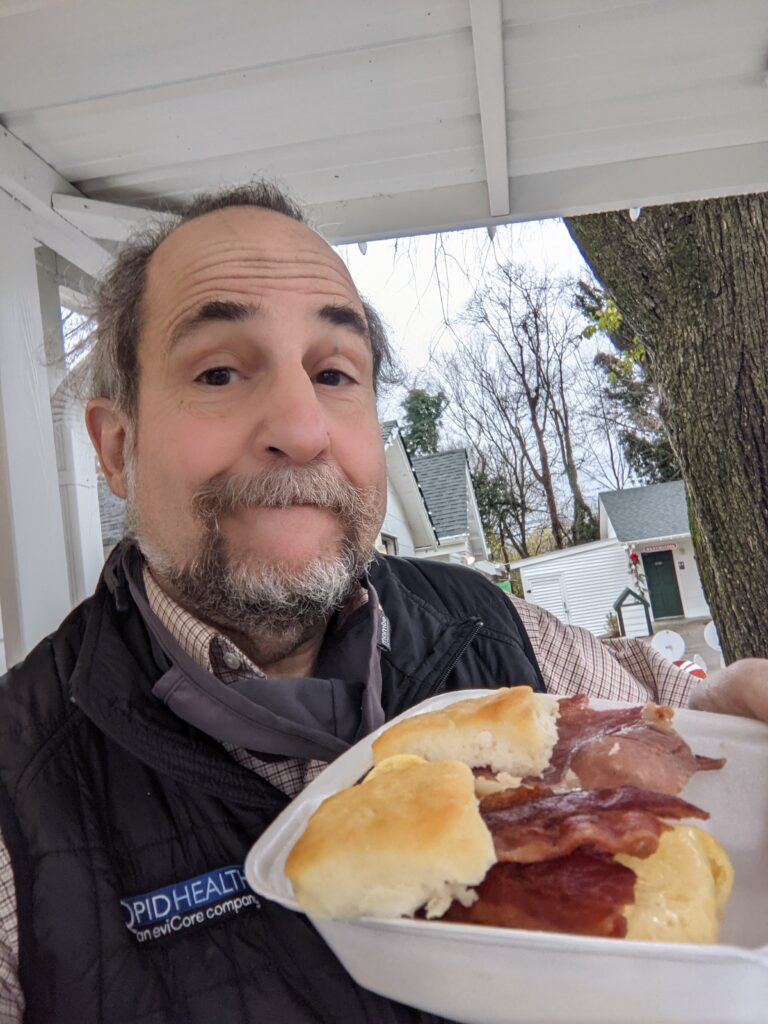
The day dawned cold and rainy, and the cozy restaurant looked steamy and crowded. I had reached a part of the country where it appeared that, pandemic be damned, nobody was wearing a mask. Prudence dictated that I order take-out. I filled my faithful travel mug with coffee, found a covered porch and, as rain dripped from the eaves, unwrapped the fluffy biscuits filled with with scrambled egg. One was garnished with crunchy bacon, the other with salty country-style ham. They were excellent, maybe the best I’d had in my life, but I wasn’t ready to pass down any judgements about biscuits quite yet. Louisiana, Alabama, the Carolinas and other biscuit-loving states lay ahead.
On to the parkway and a good old-fashioned recreational drive. There were almost no other vehicles ahead or behind, and as I enjoyed the scenery I started thinking about parkways. It hit me that, even though The Trace seems quaint and anachronistic, we’re still building parkways for recreation. We call them trails and restrict them to bikes and pedestrians, and they’re often converted from abandoned railroad lines. But they are graded and often paved roads, wandering through nature and built sheerly for pleasure. I’ve ridden one from my Vermont doorstep to Montreal. The Natchez Trace is popular with bicyclists, too. As I drove I found myself dreaming about doing this trip by bike and wondering whether or not I’d love the Natchez Trace more if I could enjoy it without motor vehicles.
But I was motoring, and I had places to go. My destination that night was a B&B on the Alabama border called The Farmhouse Sanctuary. But looking at my road atlas as I ate my biscuit, I noticed that I’d be passing close to Summertown, Tennessee. The name of that town rang a bell, and Google confirmed that this was the site of a legendary 1970s era commune. The Farm, as it was known, was probably the most successful and long-lived of the Utopian communities formed by long-haired, pot-smoking, young hippies eager to “get back to the land.” Their website told me that visitors were welcome (with some COVID-related restrictions), so I decided to take a detour.
Around 1970 a couple named Steve and Ina May Gaskin lead a caravan of school buses from Haight Ashbury to Tennessee. The Gaskins had been preaching their own psychedelic religion, a syncretic mixture of Buddhism, Christianity and the 60s zeitgeist of “Peace and Love.” Several hundred followers parked their buses on a former cattle ranch in this small, rural town with plans to build houses to live in, raise their own food and form a Utopian community.
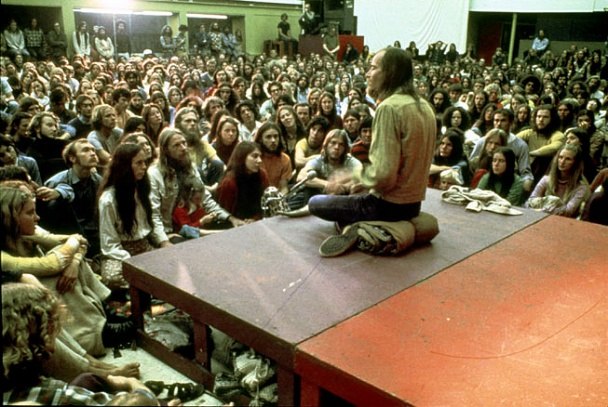
Commune members took a vow of poverty. They promised to share everything and own nothing. Though they considered marijuana a sacrament, they opposed using alcohol or tobacco. They didn’t eat animal products; Today we’d call them vegans. While their attitudes towards sexuality were unconventional (embracing, for example, four-person marriages), they were against abortion or any form of artificial birth control. Ina May Gaskin more or less founded the modern natural childbirth movement. Her book “Spiritual Midwifery” was on the bookshelf of many women who came of age late in the 20th century.
Despite the charismatic leadership of the Gaskins, The Farm had deep-seated anti-authoritarian spirit that somehow kept it from turning into something we’d call a “cult.” As the 20th century juddered to a close, the commune rode out the all the disruptive social and technological changes. They survived all kinds of other other bumps in the road, too, dealing with freeloading newcomers, the suspicions of their rural Tennessee neighbors, water and sewage issues, and the Marijuana arrest and jailing of Steve Gaskin.
They adapted to changing times, dropping some of their more unrealistic or unusual practices: the “own nothing” policy, their refusal to accept modern technology like tractors, electricity, and phones, and possibly even their practice of group marriage. It persisted even after Steve Gaskin’s death in 2014.
The Farm is now diminished in size, home to a few hundred compared to the thousands who lived here at its peak. The young hippies who arrived here in the sixties are now the greying elders of the community and a new generation had filled the farm with a scattering of small businesses and non-profits that promote solar energy, vegetarian food, and other sustainable technologies.
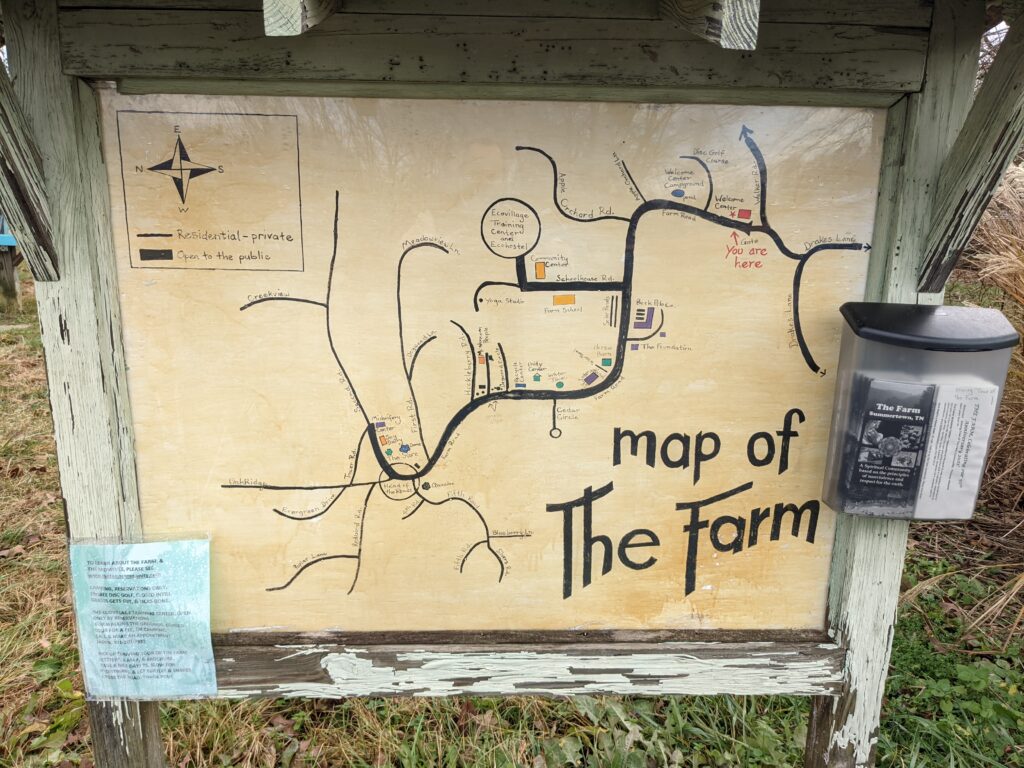
I followed my GPS to Summertown and found a road sign pointing to The Farm. A grey-haired women came out of a small gatehouse. I introduced myself, and she asked why I was visiting before opening the gate. She looked about the right age to have been one of the original settlers. I wanted to chat but it was a cold and windy December day, and I felt bad that she had left the warmth and comfort of the gatehouse to deal with another tourist. I can’t say she seemed suspicious or dubious as I explained my fascination with The Farm from my younger days, but I can’t say I felt engaged or welcomed.
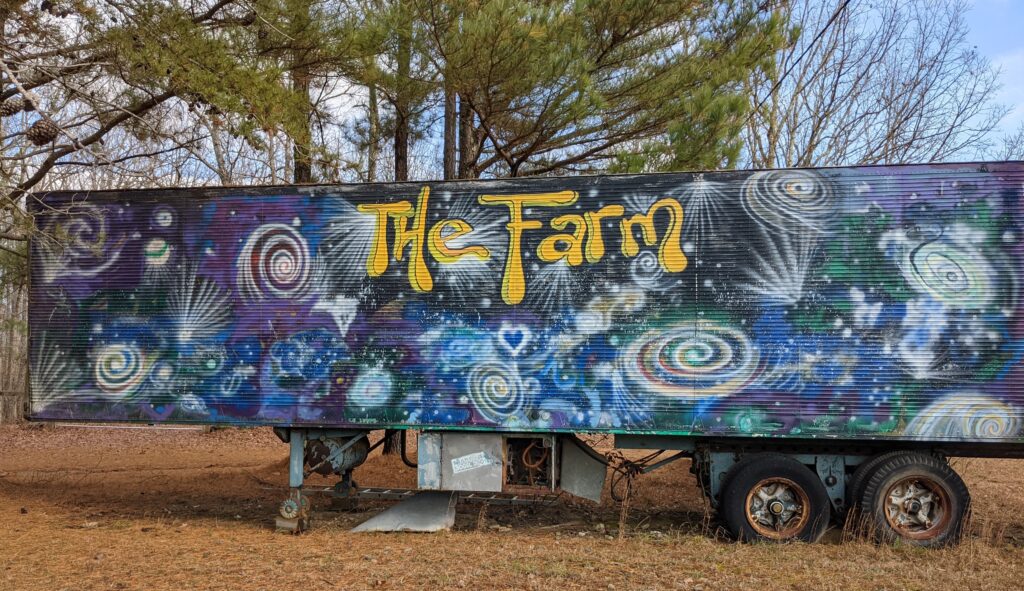
I’m not sure what I expected to find here. I think I was looking for some echo of the foolish joy and hope of my youth. I wanted to see psychedelic colors, to experience some lingering wisp of magic and wonder. To feel some creative, whimsical, transcendental marijuana-inspired drum-circle vibes. To relive some of the friendship, solidarity and shared idealism of what seemed to have suddenly become ancient history.
Driving slowly around the dirt roads, past stubbled fields brown and barren of greenery or people didn’t inspire me. I made my way to the Farm Store near the center of the property, a little saddened that I had turned into a bourgeois tourist, watching the world through the window of my comfy car and doomed to experience places only through retail purchases. But I was also hoping I could bring home a souvenir. Something that was grown on the farm. Maybe a jug of the sorghum molasses I remembered selling at the natural food store where I worked in the 1970s.
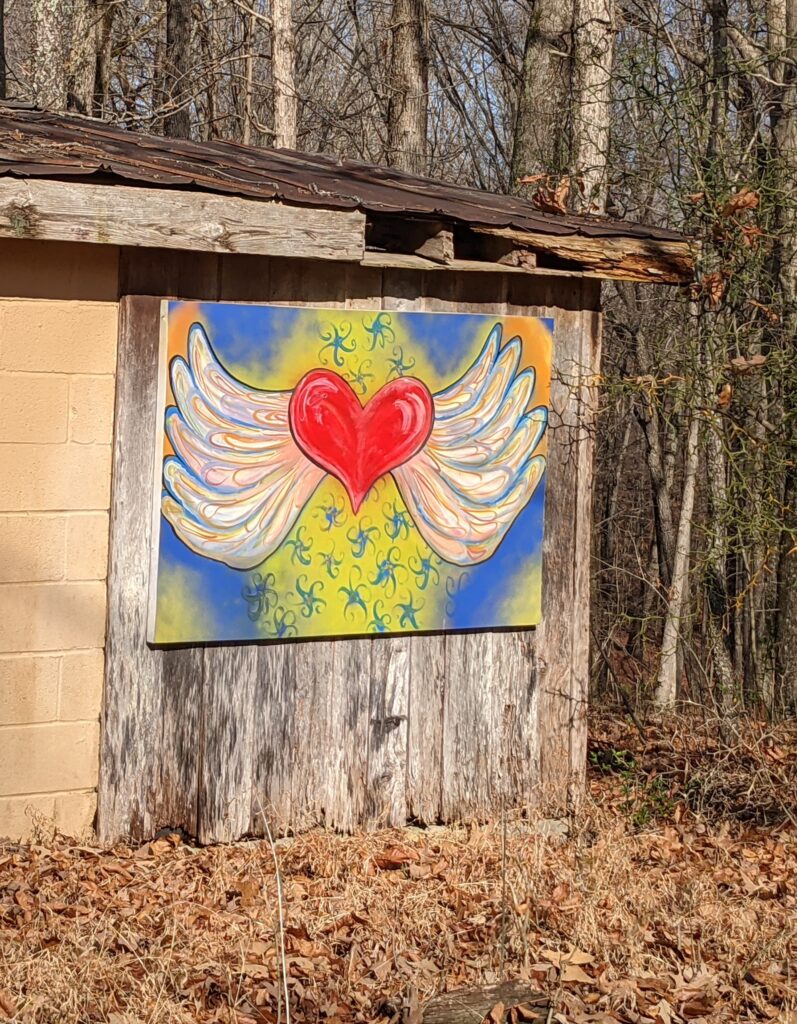
Entering The Farm Store I soon realized that it wasn’t built for visitors; it was a service for the residents, with cluttered wooden shelves that reminded me of the smaller general stores in Vermont (minus the cigarettes and beer). It had a remarkably extensive stock of vegetarian products, a cooler with some local produce and yes, a bit of tie die and other crafts by residents, but nothing that I really wanted to purchase. The shopkeeper (another of the elders) told me they had stopped making Sorghum years ago.
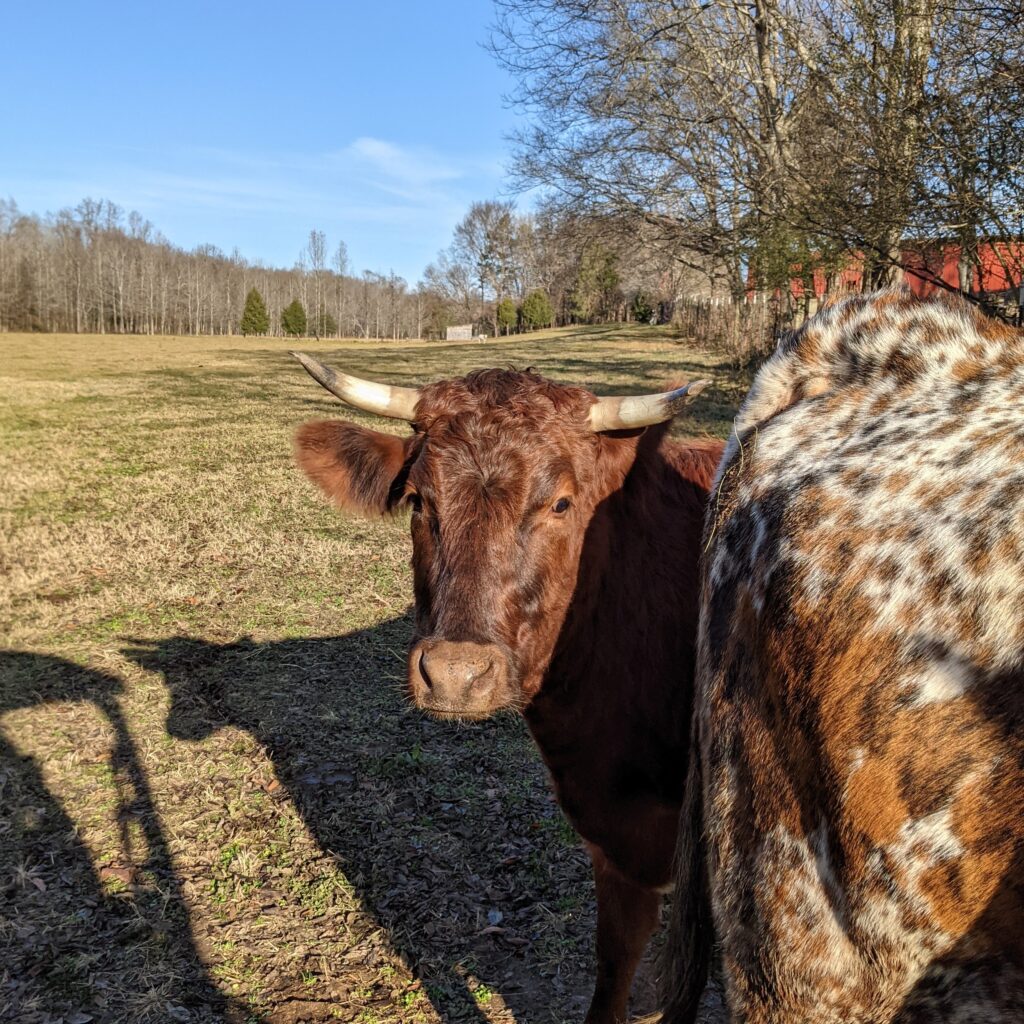
A little disappointed, I left The Farm and headed South to another kind of farm just over the state line in Florence, Alabama The Farmhouse Sanctuary is a haven for mistreated animals that is also a bed and breakfast. Some years ago the owners, Conrad and his wife Ute (pronounced “`Oo-teh”) purchased some wild mustangs that had been scheduled to be “harvested.” Later they took in a few local horses that had been mistreated and were destined for the slaughterhouse. As time went by, they rescued and adopted sheep, goats, longhorn cows, and donkeys.
It looked like a wonderful place to visit, situated just off the Natchez Trace, in rolling farmland not far from the Tennessee river and the Alabama border. The room was priced a bit beyond my cheapskate budget, but the promise of pizza from their wood-fired oven and breakfast from the farm’s fields clinched it.
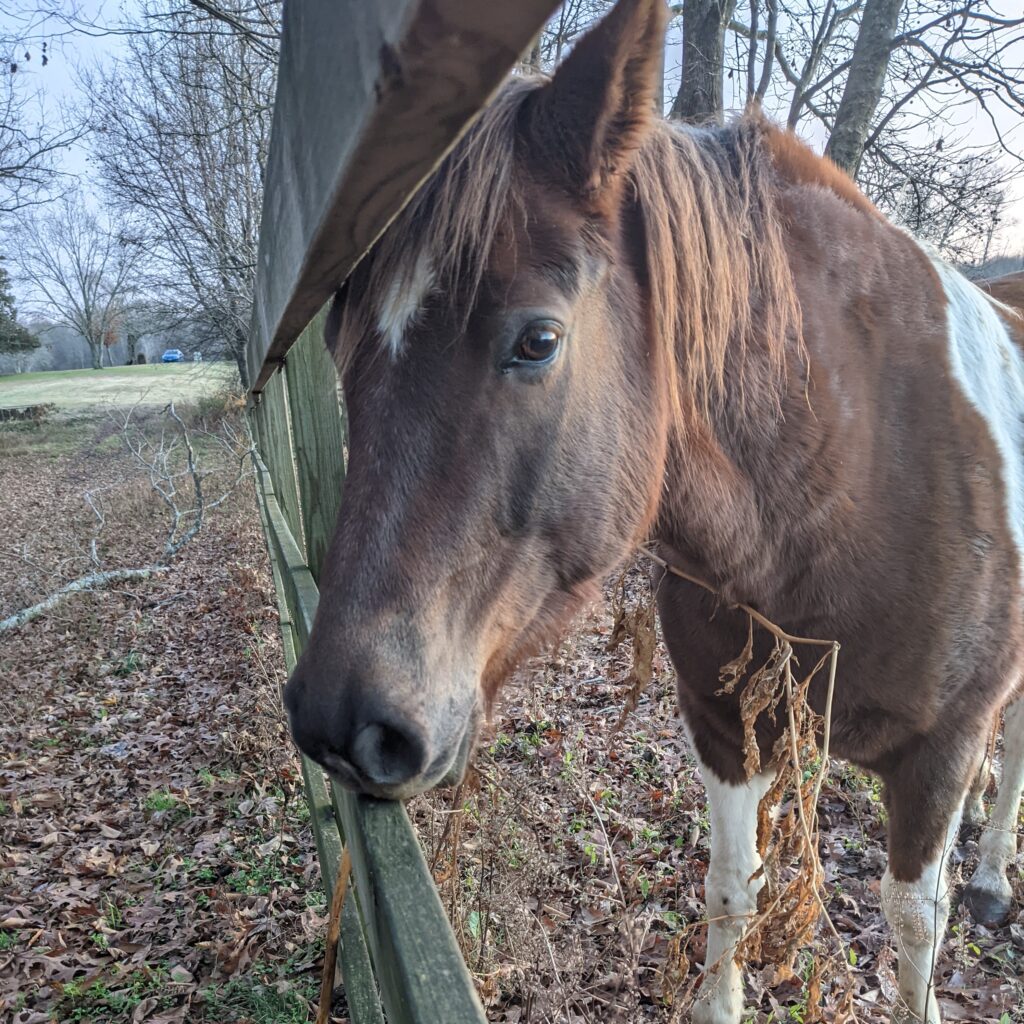
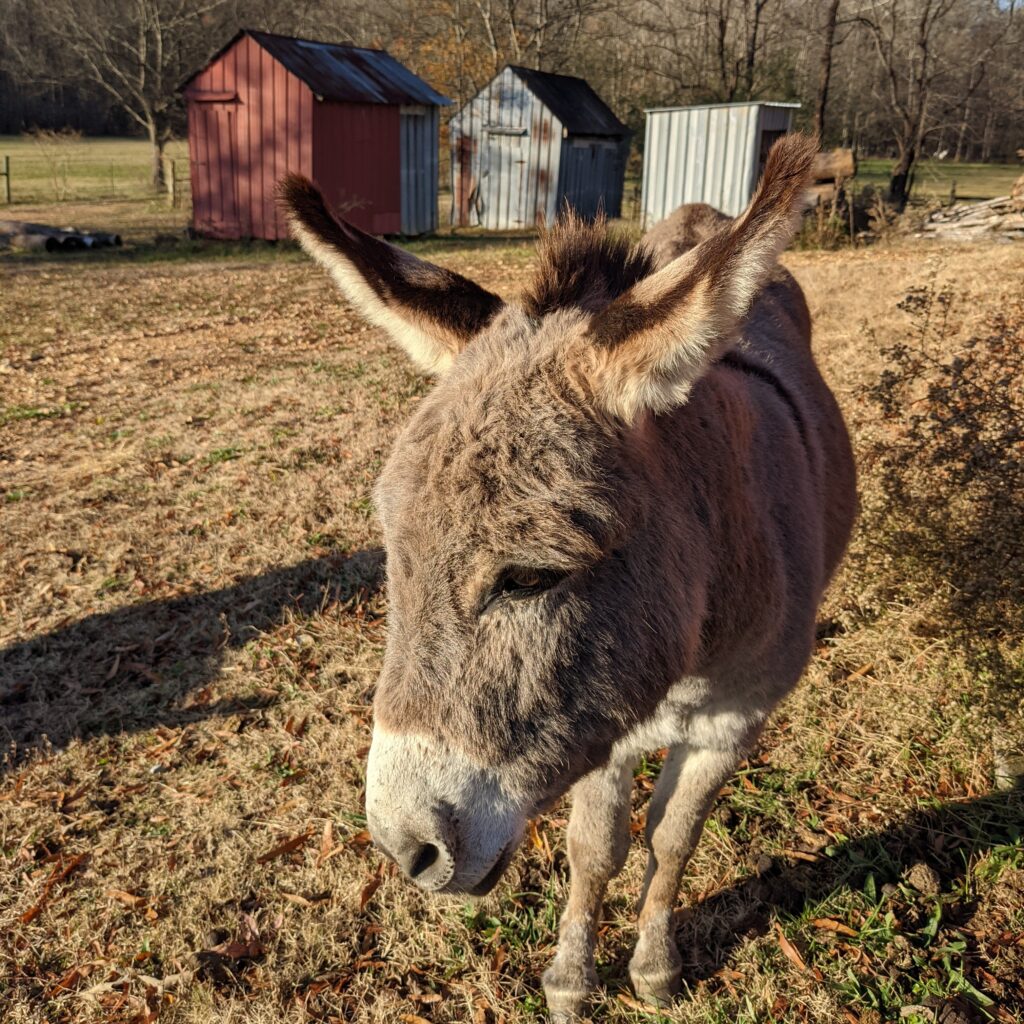
I arrived with a few hours of daylight left, so after a warm welcome and a brief tour I wandered around the grounds, visiting a few of the rescued horses, goats, and donkeys. I crossed one of their now-fallow fields back to the parkway where I had just been driving. It was late afternoon and there was neither sight nor sound of any vehicles, so I wandered along the road for a bit, enjoying the sunset, then headed back to the farmhouse.
Conrad enthusiastically showed me my his woodworking shop, where an employee was busy making lovely furniture from salvaged wood. I had noticed the stone pizza oven on the back patio, and some of my favorite books on cooking and baking in the common room. It turned out that Conrad was more than a casual cook and baker. He showed me his basement where he had a setup that would be any baker’s dream – a commercial bread oven with steam injection, a “dough sheeter” to make laminated dough for Croissants and other flaky pastries, and just about every baking tool I’d ever dreamed of owning. I was a little jealous, but I enjoyed talking with him about baking, amateur cheese making (another interest we shared) and his plans to teach classes on these topics at the farmhouse.
Though we were happily chatting and sharing our enthusiasms, I was keenly aware of the proverbial elephant in the room. From the moment I first started planning this trip I had been simultaneously curious and wary about leaving my snug little Northeastern liberal bubble and visiting the conservative, rural south. When I joked about plastering my car with gun-control, Antifa, atheist, BLM, and Hillary Clinton bumper stickers one of my friends said “You don’t have to: they’ll see the Vermont plates.” As I left her home, Ann (only half-joking) warned me to be careful; Alabama would be different from Nashville.
I liked Conrad, but at the same time I was certain that we faced each other from opposite sides of a divided nation’s battle lines. I’m proud of my finely-tuned ability to suss out people’s political beliefs based on books, magazines, artwork, and other telltale signs. I suspect this is a survival skill inherited from my Eastern European Jewish ancestors. Along with the cookbooks in the common room I noticed a few magazines with very conservative viewpoints. They weren’t the kind of extremist craziness I had feared finding in the South (I later heard some of that on the radio as I drove through Mississippi and Alabama). These were, sophisticated, well-informed journals by intelligent clergy and academics. The articles I glanced at were based on religious beliefs and historical analysis that I didn’t share, but could respect. They sometimes raised points that made sense to me. But in the end the articles all arrived at conclusions that felt wrong. Often not just wrong but alarming and dangerous.
I was the only guest, and Conrad joined me at the table. We talked as I dug into his home-made pizza that evening . I was sure he sussed my political beliefs as well as I knew his (I couldn’t hide those Vermont plates!) but we were being polite and decent. We liked each other, I was a guest in his house, and I was a customer for his business. Though we kept steering the conversation away from anything controversial or ideological It didn’t feel at all awkward. Well, at least for most of the evening.
I was the one who stumbled, ending our “tiptoeing around politics” dance. It seems I have a habit of blurting things out without careful consideration. I was talking about my visit to the Tennessee State Museum and let slip that I saw an interesting sign of how times had changed: a large bust of Nathan Bedford Forrest, on display, but tucked neatly into the corner of a small anteroom rather than prominently exhibited . Forrest was a general in the Confederate army. He was called “The Wizard of the Saddle” and famed for his brilliant cavalry and artillery tactics, but I knew him for his actions after the war, as a white separatist terrorist, the first “Grand Wizard” of the Ku Klux Klan.
I immediately regretted mentioning him, but I had no idea how raw a wound I had been scraping; I didn’t know this at the time, but a few months ago, following Black Lives Matter demonstrations, Forrest’s remains were removed from their Nashville resting place, and the bust I was discussing was moved to the museum from a prominent place in the State Capitol. Opinions about these two actions broke down on racial and partisan lines. The controversy had been divisive and angry.
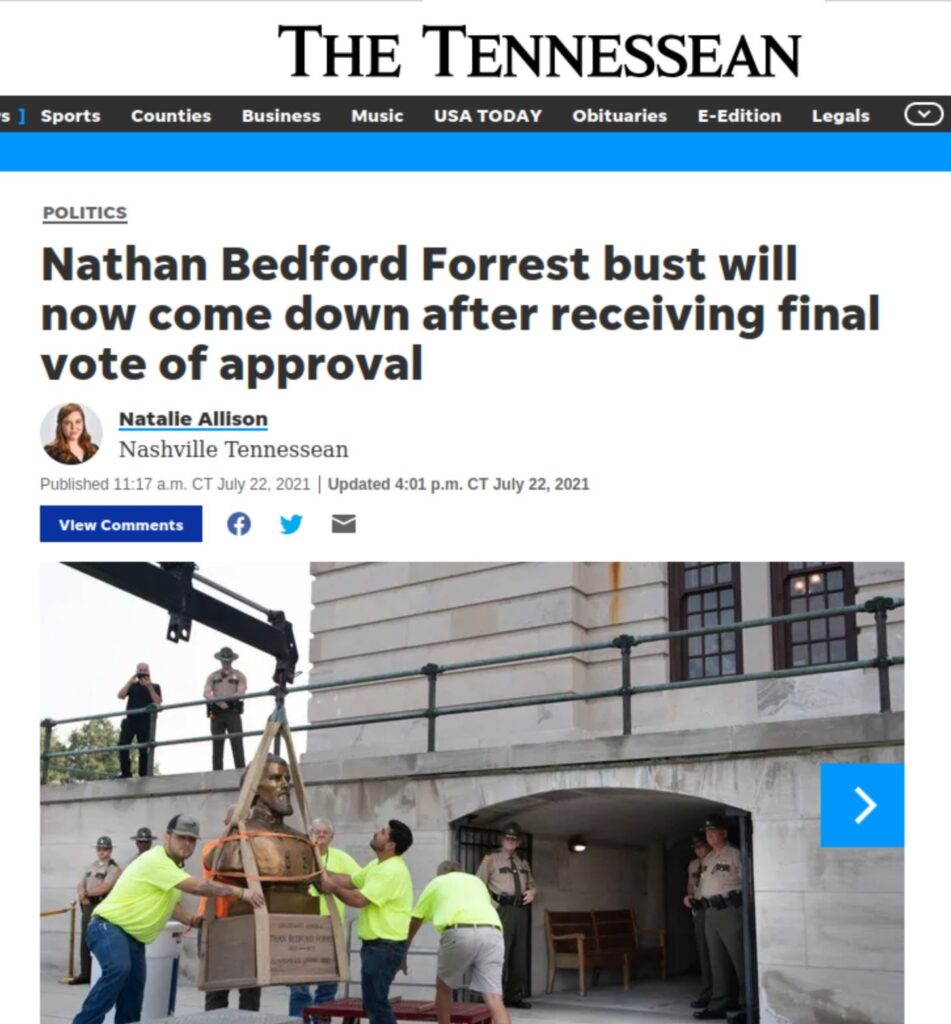
Conrad listened politely. Then I listened politely as he told me that Forrest never intended the Klan to be “an anti-black organization,” but helped establish it just to scare off “carpetbaggers,” Yankee opportunists who came South after the War 1 to exploit newly-franchised black voters for their own selfish gain. I resisted the temptation to argue, nodded, smiled, and filled my mouth with pizza, but after I swallowed I couldn’t help making a joke “Well,” I said “I promise I’m just here for a vacation.”
My faux pas and my host’s odd defense of Nathan Forrest didn’t seemed to do any real damage to our friendly encounter. After dinner I wandered into the common room where Conrad was watching TV. “You would like this movie.” he said, and he was right. Muscle Shoals is a 2013 documentary about a town a few miles from where I was sitting. Despite this tiny town’s isolated location on a swampy stretch of the Tennessee River, Muscle Shoals was a major hub of the music business starting in the 1960s, cranking out dozens of hit songs.
It’s not surprising that white Southern acts like The Allman Brothers and Lynyrd Skynyrd recorded there, but the place was home to urban black artists like Aretha Franklin, Percy Sledge, Wilson Picket, the Staple Singers and Otis Redding . Even more surprising, it seemed that every Rock and Roll superstar I could name cut records there: The Rolling Stones, Bob Dylan, Rod Stewart, Paul Simon. The movie was a revelation, with one artist after another (Aretha, Jimmy Cliff, Keith Richards, Alicia Keys, Bono) sharing memories of the place.
Conrad had left the room to do some chores, and as I sat watching the movie I realizing that Conrad had queued up the video and started watching anticipating that I would notice, eager to share a part of his community that this aging hippy from distant Vermont would appreciate.
Early the next morning, after a breakfast of the farm’s scrumptious eggs and sausage and thick slices of Conrad’s excellent bread, I joined Ute as she fed the animals. We zoomed and bounced around the farm in an ATV, the early morning chilly enough that one of the rescue dogs hopped in, jumped on my lap, and snuggled against me for warmth. I snuggled right back. Ute would stop to load up the vehicle and to toss food to her many “babies.” These were very large babies. I felt a little intimidated when a herd of longhorn cattle raced over and crowded us, eager for breakfast. I noticed that one was missing a leg, but was managing just fine, loping along with the others to chase the food on the three she had left.
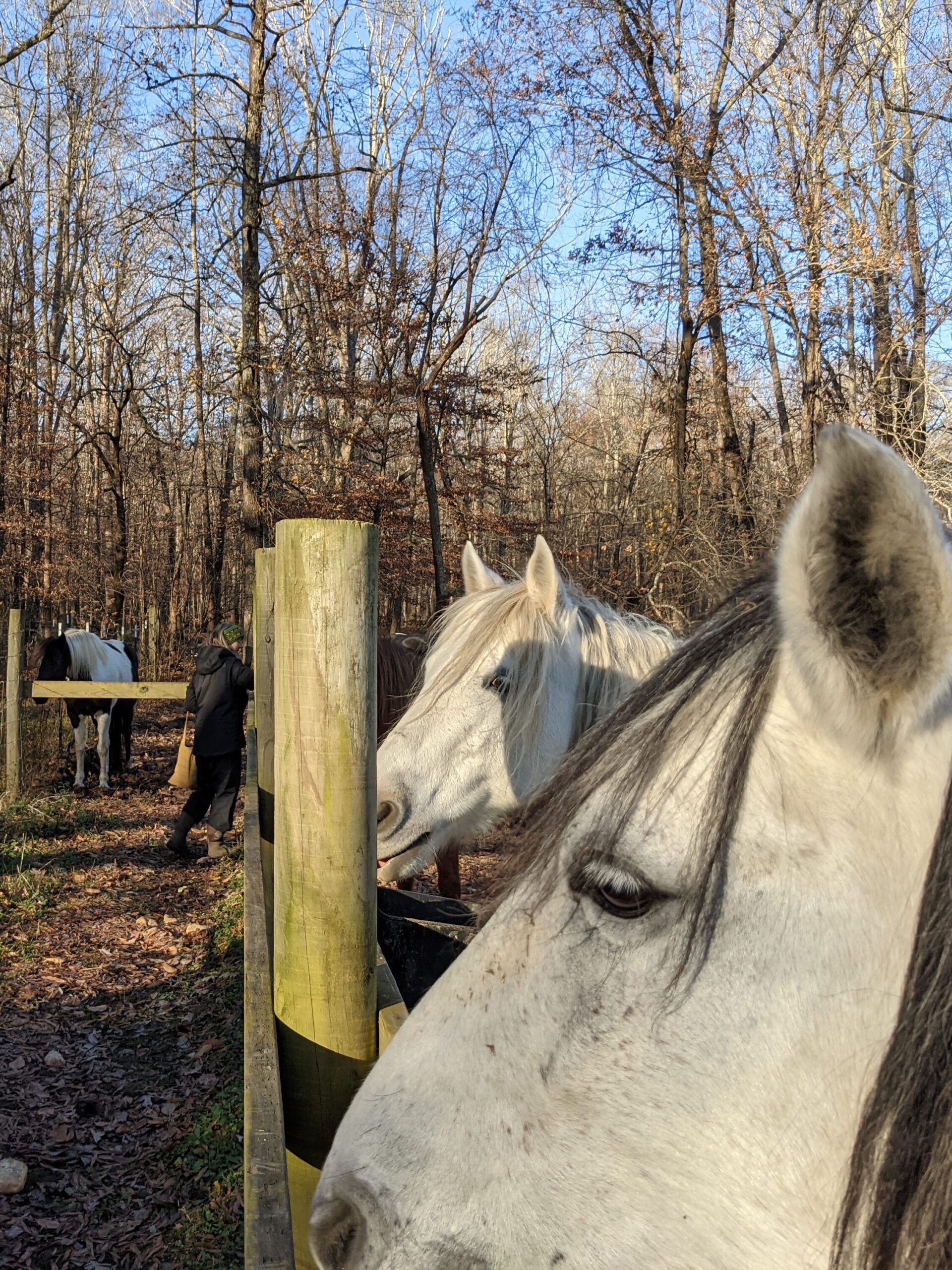
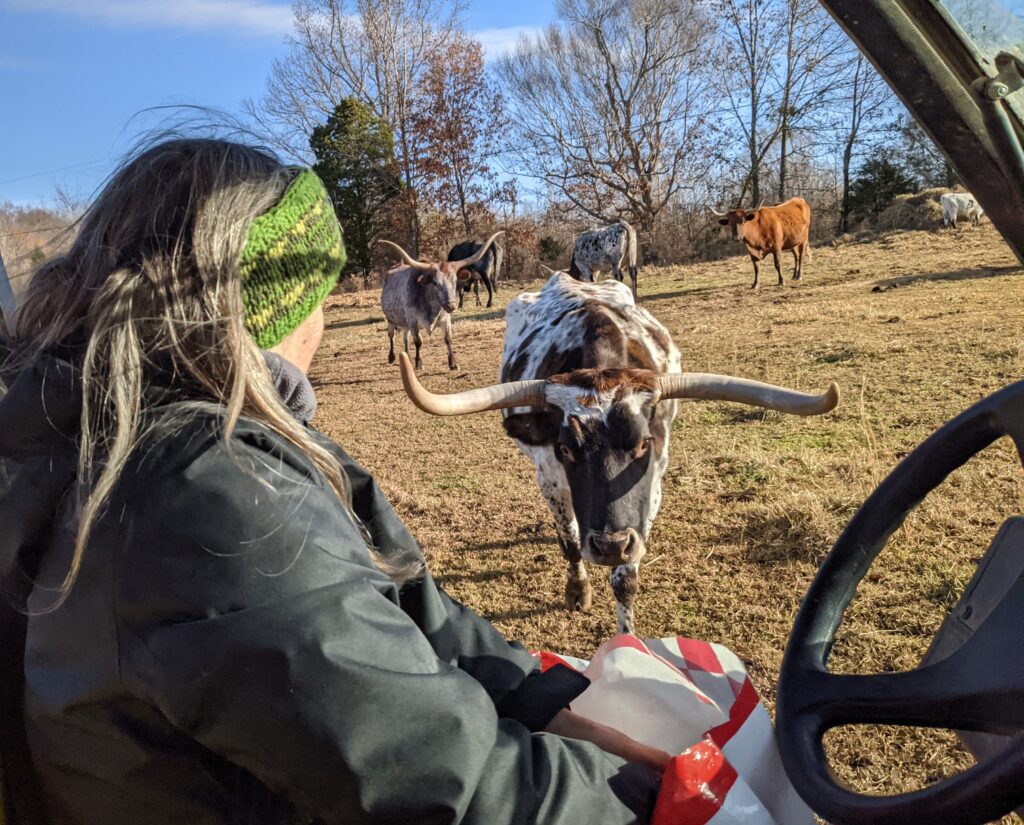
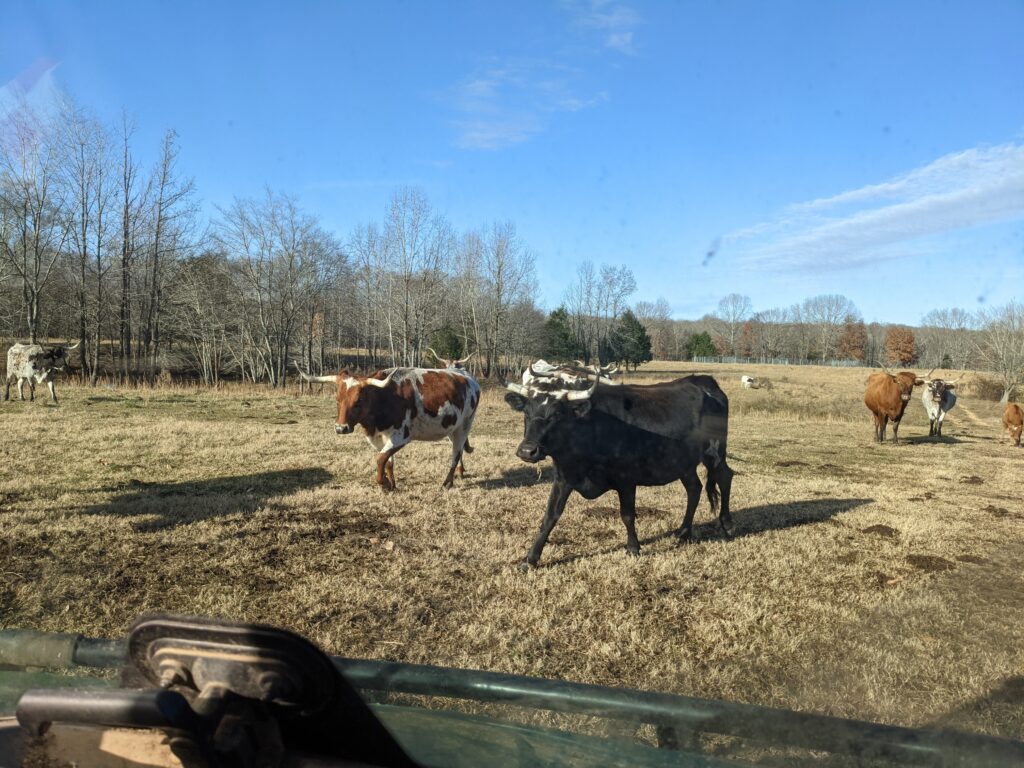
After feeding time I was back on the Natchez Trace, headed to my next destination, the Jeff Busby campground.
It is a high art to commune with someone you profoundly disagree with. I’m glad you and Conrad both have that skill.